
Why Healing Alone Has Its Limits
Apr 08, 2026
The modern belief in self-sufficiency
Modern culture places a strong emphasis on independence.
We are encouraged to handle our struggles privately, to “work on ourselves,” to become emotionally self-reliant.
While personal responsibility is important, this mindset has quietly reshaped how people approach healing. Many now believe that healing should be:
- individual
- private
- internally resolved
If we struggle, we assume we must not be doing enough inner work.
This belief misunderstands something fundamental about human beings:
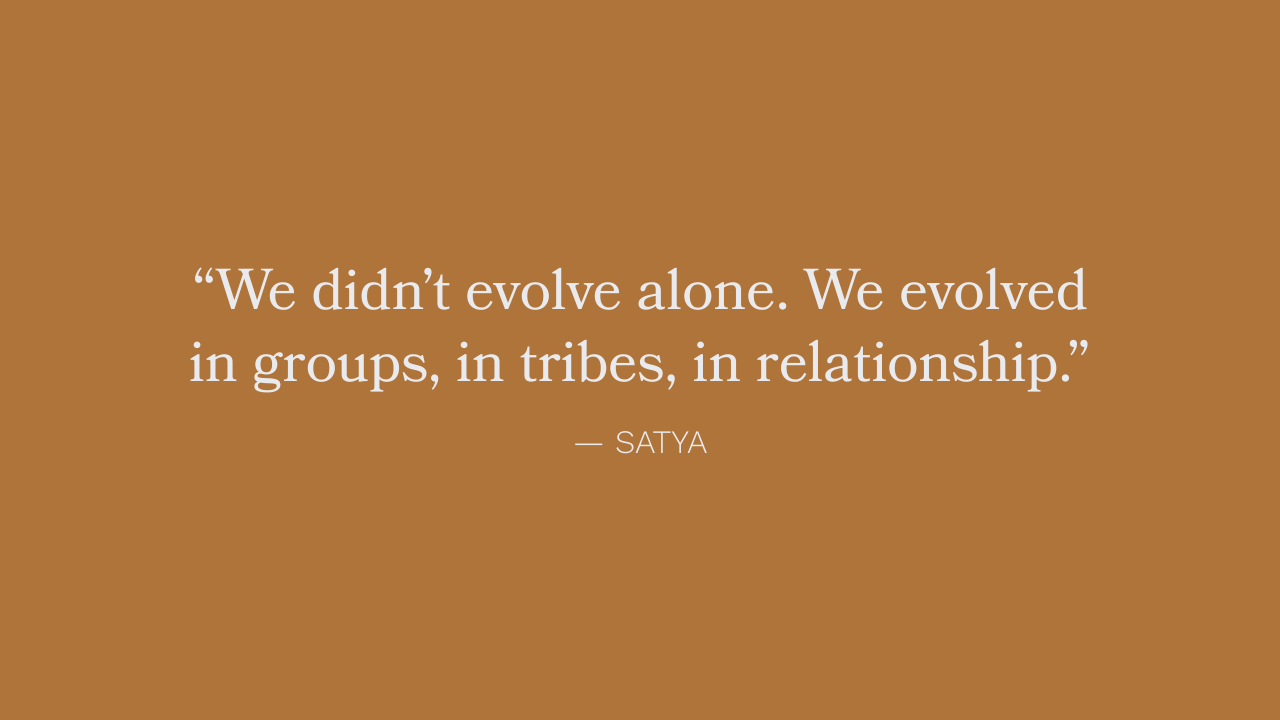
Healing in isolation is not wrong, but it is incomplete.
Humans are relational by design
From birth, our nervous system develops in relationship.
Safety, regulation, and emotional meaning are learned through connection.
This means that:
- wounds are often relational
- patterns are reinforced relationally
- and healing, by nature, also involves relationship
Many emotional struggles persist not because people lack insight, but because healing is attempted without the relational context in which the wound was formed.
“The nervous system doesn’t heal through understanding alone. It heals through experience, safety, and connection.”
No amount of reflection can replace the experience of being seen, felt, and responded to differently than before.
Why insight is often not enough
Many people reach a point where they understand their patterns clearly.
They know:
- where their wounds come from
- why they react the way they do
- what they should change
Yet nothing truly shifts.
This is not failure.
It is biology.
Trauma and emotional conditioning live beyond cognition. They are stored in the body, the nervous system, and implicit memory.
“You can understand everything with your mind and still repeat the same behaviour.”
Healing requires new experiences that contradict old expectations. And those experiences almost always involve other people.
Isolation reinforces old patterns
When healing is done entirely alone, people tend to stay within familiar internal loops.
They may:
- interpret everything through the same narrative
- reinforce self-blame
- avoid discomfort without noticing
- stay unchallenged in blind spots
Isolation often strengthens the very defences people are trying to soften.
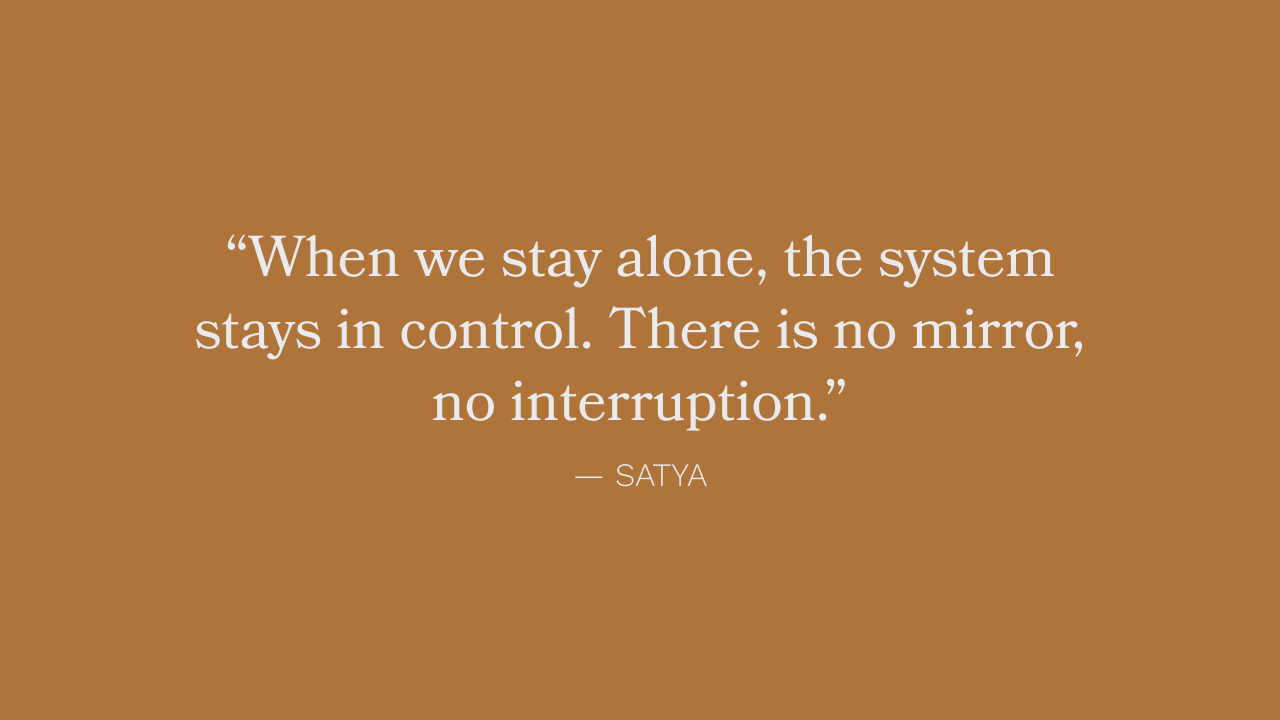
Relationship, when safe, introduces friction. And friction is not a problem. It is information.
Collective spaces and nervous system regulation
Healing in collective spaces allows the nervous system to regulate differently.
In a group or relational setting:
- emotions are shared
- resonance occurs
- empathy becomes embodied
- safety is co-created
This does not mean emotional exposure without boundaries. It means being in environments where presence, containment, and support exist.
“When one person opens in a safe collective space, others feel permission to soften too.”
This shared regulation creates conditions that are difficult, sometimes impossible, to generate alone.
The difference between dependence and interdependence
A common fear is that healing with others leads to dependence.
- dependence removes agency
- interdependence strengthens it
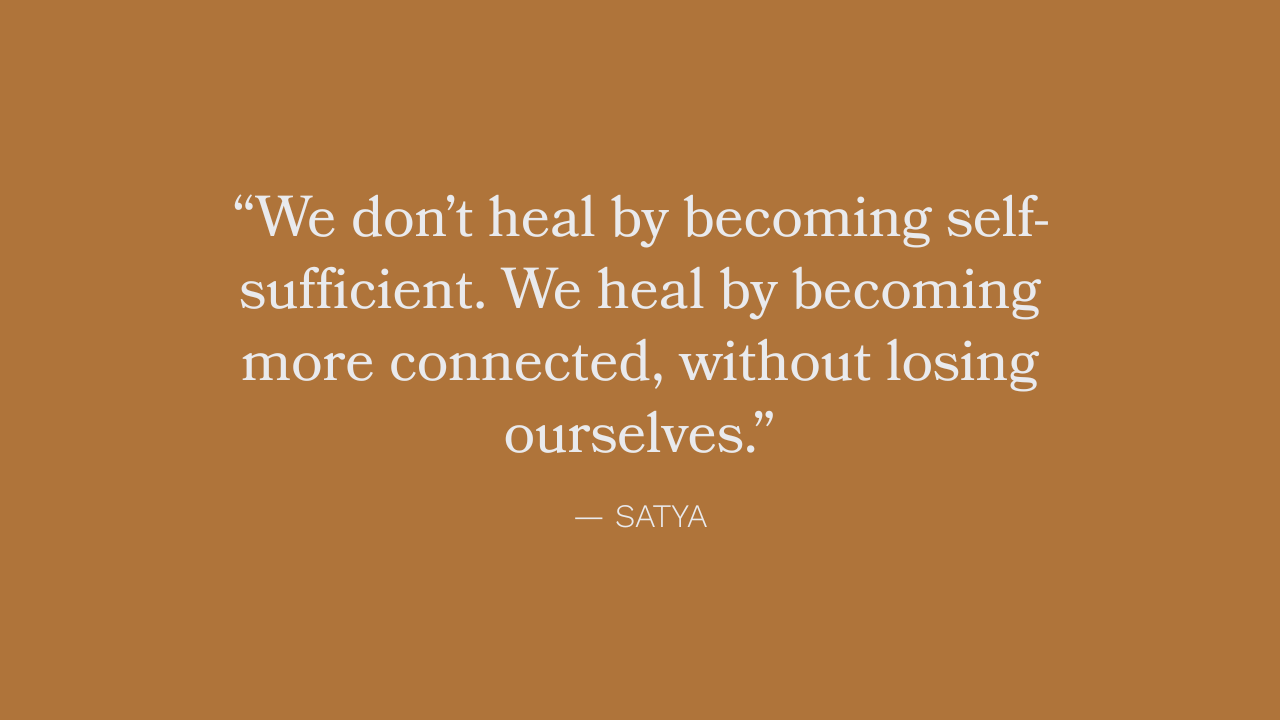
Healthy relational healing does not mean outsourcing responsibility. It means recognising that autonomy and connection are not opposites.
“Needing others does not make us weak. Denying that need often does.”
Interdependence reflects how humans have always survived and evolved.
Why collective healing feels uncomfortable
If collective healing is so natural, why does it feel so difficult?
Because relationship activates:
- vulnerability
- exposure
- loss of control
These are precisely the areas many people protect after trauma.
The nervous system often prefers familiar suffering to unfamiliar safety.
“Being alone feels safer than being seen, even when it hurts more.”
This is why people may intellectually agree with the idea of connection but emotionally resist it.
Healing as a shared responsibility
When healing is framed as purely personal, suffering becomes isolating and moralised. People feel they must fix themselves alone.
In collective contexts, a different understanding emerges:
- individual pain affects the whole
- healing contributes to the collective
- well-being is shared
“If one person in the group is not well, the group is not fully well.”
This perspective shifts healing from self-improvement to participation in something larger.
What healing together actually looks like
Healing together does not mean:
- constant sharing
- emotional dumping
- lack of boundaries
It means:
- presence
- witnessing
- being met without judgement
- allowing difference
Sometimes the most healing moment is not being helped, but being allowed to exist as we are.
Healing alone can take us far.
But it has limits.
Without relationship:
- blind spots remain hidden
- regulation stays internal
- patterns lack interruption
Healing together does not replace inner work.
It completes it.
Stay connected with news and updates!
Join our mailing list to receive the latest news and updates from our team.
Don't worry, your information will not be shared.
