
Why Trusting in Something Bigger Than You Can Change How You Heal
Jan 28, 2026
When life becomes overwhelming, people don’t usually suffer only because of pain.
They suffer because of fear, loneliness, and the feeling that they are facing everything alone.
In moments of trauma, serious illness, or deep uncertainty, the mind searches for control. It wants answers. It wants guarantees. It wants to know how things will turn out.
But healing does not always begin with answers.
Often, it begins with trust.
Not trust in outcomes.
Not trust in certainty.
But trust in something bigger than the self.
Trust is not about religion
For many people, the idea of trusting in something bigger immediately sounds religious.
But trust, in this context, does not require religion, doctrine, or belief in a specific God.
People place this trust in different things:
- God
- life
- nature
- consciousness
- a higher intelligence
- a sense of meaning or mystery
What matters is not what they trust in.
What matters is that they experience themselves as held by something beyond their individual control.
“People who have a connection with the great mystery, whether they call it God or consciousness, often go through suffering with more peace.”
This connection changes how the nervous system responds to threat.
Trauma and the loss of safety
Trauma is not only about what happened.
It’s about what was lost.
Often, what is lost is the sense of safety, coherence, and trust in life itself.
After trauma, many people feel:
- hypervigilant
- alone with their fear
- unable to rest
- disconnected from meaning
The body stays on alert. The system expects danger.
In this state, healing becomes difficult, not because the person is weak, but because their system does not feel supported.
This is where trust becomes a resource.
Why trust supports healing
Trust does something very specific inside the body.
It reduces existential threat.
When someone believes they are held by something bigger, the system shifts from:
I am alone and unsafe
to
I am not alone, even if I don’t know what will happen.
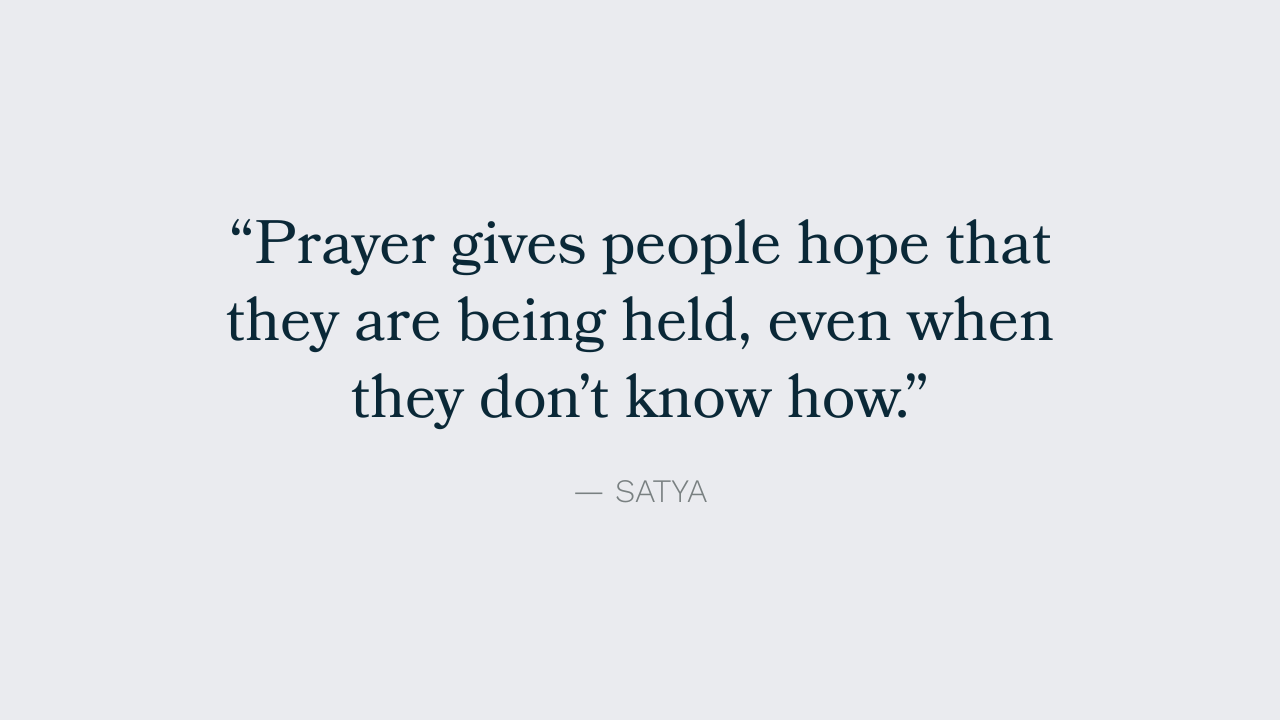
Hope here is not optimism.
It is not denial.
It is regulation.
What hospitals observe again and again
In medical settings, especially around serious illness or end-of-life care, a clear pattern appears.
People who have some form of spiritual trust often experience:
- less panic
- less existential loneliness
- more acceptance
- more peace
This does not mean they suffer less physically.
It means they suffer less alone.
“In hospitals, people who trust in something bigger often die with more peace than those who face it alone.”
This peace is not resignation.
It is not passivity.
It is a different relationship with fear.
The role of hope in the healing process
Hope is not just emotional.
It is biological.
Hope changes how the nervous system responds to stress.
When a person feels there is meaning, support, or possibility beyond what they can control, the body relaxes enough to allow healing processes to function more effectively.
“They have hope that they will be provided for. They don’t know how, but they trust that they will.”
This kind of hope reduces chronic stress, which is one of the biggest obstacles to healing.
The brain doesn’t distinguish belief from reality
From a neurological perspective, the brain does not clearly distinguish between what is imagined, believed, or happening in the present moment.
This is why fear can feel real even when no danger is present.
And it’s also why trust can feel real even when outcomes are uncertain.
When someone prays, visualizes, or deeply believes they are supported, the nervous system responds accordingly.
This is not superstition.
It is how perception shapes physiology.
Trust as a stabilizing inner reference
When people trust in something bigger than themselves, they gain an inner reference point that is not dependent on circumstances.
Instead of asking:
How do I control this?
They begin to ask:
How do I stay connected while this unfolds?
This shift reduces internal struggle.
It allows people to tolerate uncertainty without collapsing.
Trust does not mean giving up responsibility
One common misunderstanding is that trust leads to passivity.
In reality, healthy trust often increases responsibility.
When people are less consumed by fear, they can:
- make clearer decisions
- follow medical treatment more consistently
- ask for support
- stay emotionally present
Trust does not replace action.
It supports it.
Why trust is especially important after trauma
After trauma, the system often believes:
- the world is dangerous
- nothing can be relied on
- I must stay in control
This belief keeps the body in survival mode.
Trust gently challenges this narrative.
It does not say nothing bad will happen.
It says I don’t have to face everything alone.
“Trust allows people to relax into something bigger than their fear.”
This relaxation is what makes healing possible.
Prayer as a form of inner dialogue
Prayer does not have to be formal.
It can be:
- speaking internally
- asking for guidance
- expressing fear or gratitude
- visualizing support
What matters is the relationship it creates.
Prayer becomes a way of saying:
I don’t know how to do this alone.
That admission itself is regulating.
Trust, visualization, and manifestation
When people trust deeply, their perception shifts.
They begin to imagine safety, support, and possibility.
This changes how the brain organizes experience.
“When we pray, visualize, and believe, we start to rewire our system. That’s manifestation.”
Manifestation here is not magical thinking.
It is the body aligning with a different internal reality.
One where hope replaces helplessness.
When trust feels impossible
Some people struggle with this idea.
Especially those who have been betrayed, abandoned, or deeply hurt.
For them, trust does not come easily.
And it should not be forced.
Trust can start very small.
Not in God.
Not in life.
But in the moment.
In the breath.
In the body.
In the possibility of support.
Even that is enough to begin.
A grounded reflection
You might reflect on these questions:
- What do I trust in when things fall apart?
- Do I feel alone when I suffer, or held by something?
- Where does fear take over control?
- What kind of trust would feel realistic for me now?
These are not questions to answer quickly.
They are invitations to notice where support could enter.
Trusting in something bigger than yourself does not mean escaping reality.
- It means changing your relationship to it.
- It allows fear to soften.
- It allows the body to rest.
- It allows healing to happen with less resistance.
“Trust is not about knowing how things will happen. It’s about knowing you are not alone.”
And sometimes, that is what makes all the difference.
Stay connected with news and updates!
Join our mailing list to receive the latest news and updates from our team.
Don't worry, your information will not be shared.
