
The Work Behind Deep Change
Jan 21, 2026
Why clarity rarely changes a life on its own
Many people reach moments of clarity.
- They understand their patterns.
- They recognise their wounds.
- They see where things went wrong.
And yet, months later, very little has changed.
This leads to frustration and self-doubt. People ask themselves why awareness doesn’t translate into a different life.
This gap is not a personal failure. It points to a misunderstanding of what real change actually requires.
“Understanding is only the beginning. Change happens in what you sustain after.”
Deep change is not a moment.
It is a process that unfolds over time, through repetition, discomfort, and responsibility.
The illusion of the breakthrough
Modern healing culture often focuses on breakthroughs.
- The moment something clicks.
- The insight that explains everything.
- The experience that feels transformative.
These moments can be valuable. They can open perspective and soften resistance.
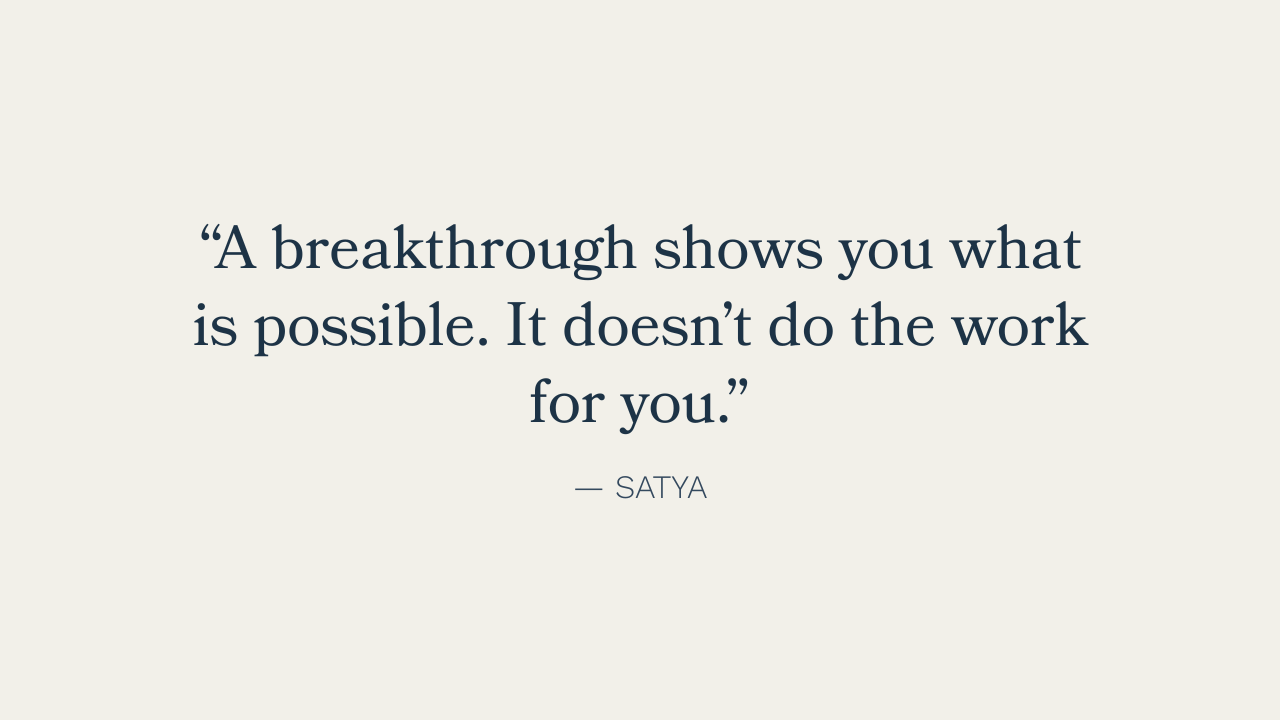
Without follow-through, breakthroughs become stories we tell ourselves about who we could be, rather than who we are becoming.
Why the work after insight is harder
Insight feels relieving.
- It creates a sense of movement and hope.
- It often brings emotional release.
The work that follows feels very different.
It requires:
- consistency instead of intensity
- patience instead of urgency
- responsibility instead of revelation
This is where many people stop.
The nervous system often prefers the familiarity of insight to the discomfort of sustained change.
“It’s easier to understand yourself than to live differently.”
Deep change happens in daily life, not special moments
One of the most avoided truths about healing is that real change happens in ordinary situations.
- Not in sessions.
- Not in retreats.
- Not in peak experiences.
But in:
- how we speak when we’re triggered
- what we tolerate repeatedly
- the boundaries we maintain
- the habits we reinforce
“If nothing changes in your daily life, nothing has changed.”
This can feel confronting, because daily life offers no drama and no validation.
The nervous system resists unfamiliar safety
A key reason deep change is difficult is biological.
When someone has lived for years in stress, conflict, or emotional unpredictability, the nervous system adapts to that state.
- Calm can feel unfamiliar.
- Stability can feel empty.
- Healthy relationships can feel boring.
The system may resist change not because it’s bad, but because it’s unknown.
“The nervous system prefers familiar pain to unfamiliar peace.”
This is why people often return to old patterns even after powerful insights.
Why repetition matters more than motivation
Motivation comes and goes.
Deep change does not rely on motivation. It relies on repetition.
New neural pathways are built through consistent behaviour, not understanding.
This means:
- choosing differently even when it feels unnatural
- holding boundaries even when guilt appears
- staying present instead of dissociating
- tolerating discomfort without escaping
“Change is trained, not realised.”
This kind of work is quiet, unglamorous, and rarely shared online.
The role of responsibility in healing
Another uncomfortable aspect of deep change is responsibility.
- Not blame.
- Not self-criticism.
Responsibility.
Responsibility means recognising that insight creates choice. And choice creates accountability. “Once you see, you are responsible for how you respond.”
This can feel heavy. But it is also what restores agency.
Without responsibility, healing becomes passive.
With responsibility, it becomes embodied.
Why many people unconsciously avoid deep change
There are several common avoidance patterns:
- staying in reflection without action
- seeking more understanding instead of applying what’s known
- repeating healing experiences without integration
- identifying with wounds instead of working with them
None of these are wrong. They are protective strategies.
“Avoidance doesn’t mean you don’t want to heal. It means something is afraid of change.”
Recognising this allows compassion without stagnation.
Deep change reshapes identity
One of the most destabilising aspects of real change is that it alters how we see ourselves.
If someone is no longer:
- the victim
- the caretaker
- the strong one
- the lost one
Then who are they?
Identity loss often creates resistance to healing.
“Sometimes we don’t resist change because it’s hard, but because we don’t know who we’ll be without our patterns.”
Deep change involves grief for old identities, even painful ones.
Why integration takes time
Integration is the process of aligning insight with life.
- It is not linear.
- It often includes setbacks.
- It requires honesty and support.
- It cannot be rushed.
The body needs time to trust what the mind already understands.
This is why sustainable change unfolds over months and years, not days.
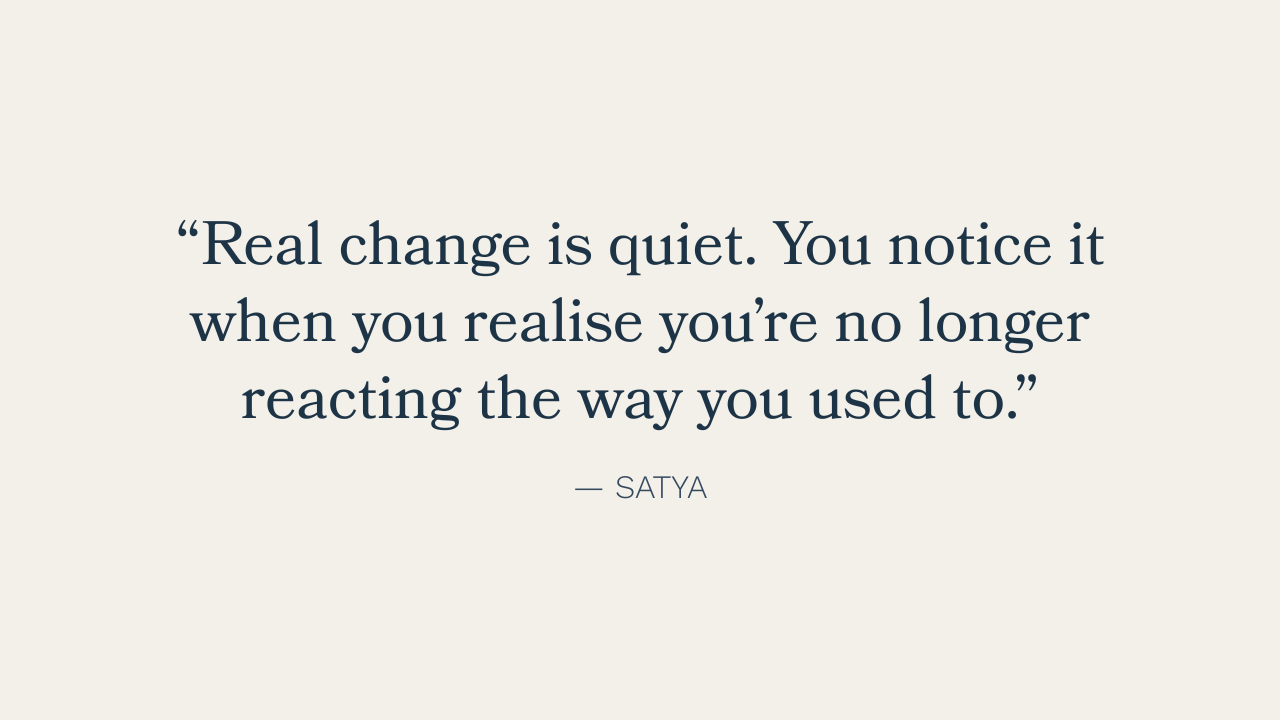
Deep change is not dramatic.
- It doesn’t announce itself.
- It doesn’t seek attention.
- It doesn’t feel exciting most of the time.
But it reshapes a life from the inside out.
The part of healing most people avoid is not pain.
It is commitment.
Stay connected with news and updates!
Join our mailing list to receive the latest news and updates from our team.
Don't worry, your information will not be shared.
