
The Loneliness Pattern: “I Can Handle It Alone”
Apr 01, 2026
Many people live with a quiet rule inside them:
Don’t depend on anyone.
It often sounds responsible, mature, even admirable.
- “I can handle it alone.”
- “I don’t want to bother anyone.”
- “I’ll figure it out myself.”
But this pattern rarely comes from confidence.
It usually comes from learning, early in life, that support was unreliable.
How this pattern is formed
For many people, there was a time when asking for help did not work.
- They were not met emotionally.
- Their pain was minimized.
- Their needs were ignored, misunderstood, or overwhelmed the adults around them.
So the system adapted.
“Many people learned early that they couldn’t count on anyone, so they had to deal with everything alone.”
This adaptation is intelligent. It allows the child to survive.
But what helped then often limits connection later.
Independence as protection
When someone grows up believing they must manage everything alone, independence becomes a form of protection.
- Not asking for help avoids disappointment.
- Not sharing vulnerability avoids rejection.
- Not relying on others avoids being hurt again.
Over time, this becomes automatic.
The person may not even notice how much they are holding by themselves.
Why asking for help feels unsafe
For someone with this pattern, asking for help is not neutral.
It can activate fear, tension, or shame.
“If I show you my weakness, you will run away."
This belief is not intellectual.
It lives in the nervous system.
Even when life circumstances change, the body still expects abandonment.
Two common outcomes
This pattern tends to lead people in one of two directions.
The high-functioning survivor
Some people become very capable.
- They work hard.
- They manage crises.
- They appear stable and strong.
But they struggle with intimacy and emotional closeness.
They can survive anything, but they can’t really go into true intimacy.
The overwhelmed isolator
Others feel stuck, exhausted, or depressed.
They withdraw, numb themselves, or avoid life challenges because everything feels too heavy to carry alone.
Different expressions, same root belief: I can’t rely on anyone.
Loneliness inside relationships
One of the most painful effects of this pattern is emotional loneliness inside relationships.
Many people are partnered, married, or surrounded by others, yet feel unseen.
They share responsibilities but not inner experiences.
They avoid asking for support even when they need it.
“I see many people married, paying the bills together, but without true partnership.”
True partnership requires vulnerability.
And vulnerability once felt unsafe.
Why isolation blocks joy
Isolation does not only limit support.
It also limits joy.
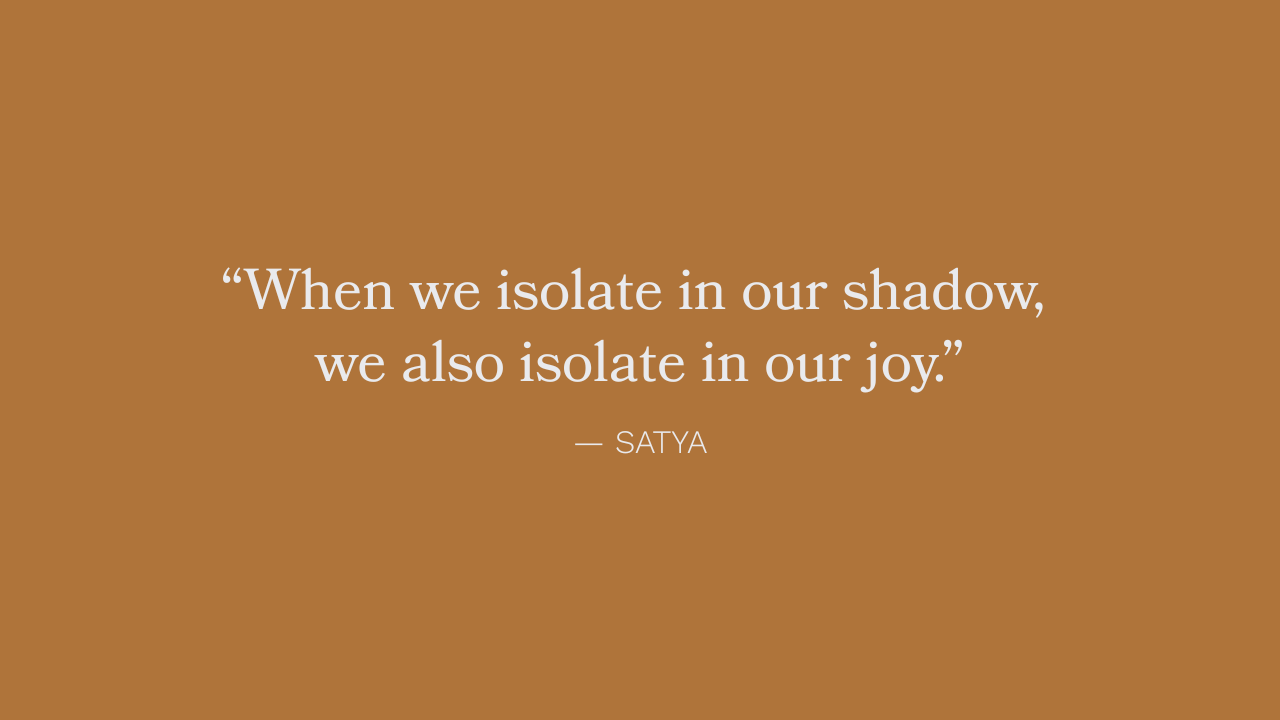 If you don’t allow yourself to be seen in difficulty, you often can’t fully open in pleasure, love, or creativity either.
Life becomes functional, but flat.
What the body holds
This pattern is stored in the body.
In constant tension.
In holding the breath.
In shoulders that never fully relax.
Satya says:
“The body memorizes what we had to do to survive.”
This is why insight alone is not enough.
The system needs new experiences of safety.
How this pattern begins to soften
Healing does not mean suddenly depending on everyone.
It starts small.
- With one safe person.
- With learning to name what you feel before sharing it.
- With noticing the impulse to withdraw without forcing openness.
“When we share authentically with someone safe, the body learns trust again.”
Trust is rebuilt through experience, not pressure.
When you still choose to be alone
There will be moments when you recognize the pattern and still isolate.
That does not mean you are failing.
It means part of you still believes isolation is necessary.
“All of this was there to save you.”
Respecting that truth allows change to happen gently instead of forcefully.
A more realistic definition of strength
Strength is not carrying everything alone.
- Strength is knowing your limits.
- Strength is asking when it matters.
- Strength is letting yourself be supported without losing yourself.
This is not learned overnight.
It is practiced.
Reflection
You might reflect on these questions:
- When did I learn I had to handle things alone?
- What happened when I needed support in the past?
- What kind of support feels safe for me now, if any?
Even noticing these questions is already a shift.
The “I can handle it alone” pattern once helped you survive.
But survival is not the same as connection.
Little by little, as safety grows, life can include others again.
Not because you became weaker.
But because you no longer have to do everything by yourself.
Stay connected with news and updates!
Join our mailing list to receive the latest news and updates from our team.
Don't worry, your information will not be shared.
